Editor’s Note: I proudly present to you, my dedicated and surfed-out subscribers, the first reader submission! This one comes from my brother, Ethan Lewis. And before I hear any murmurs of nepotism, let me say that he was the first (and at the time, only) person to send in a piece for submission. His writing is also clever and his perspective is refreshing. Enjoy.
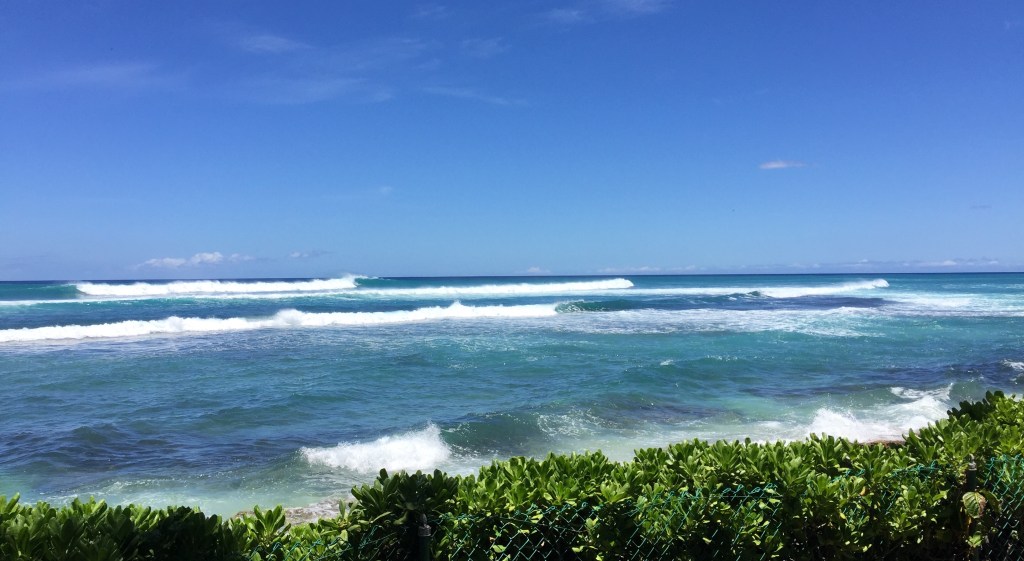
Over the past week, I spent every afternoon out in the water at Ma’ili Point. There is one day in particular that stood out. The surf was solid, nearly double overhead sets. All from the massive, wrapping north swell hitting O’ahu.
While big surf often translates to good waves, a north swell hitting Ma’ili makes the spot quite tricky. Peaks were popping up almost out of nowhere, creating some lefts which were long and bending into the channel and others that were tight and quick, hovering over the shallow reef shelf. Countless other waves broke somewhere in between.
Knowing where to be at the right time was undoubtedly difficult. The law of averages laid a heavy hand on most surfers in the “lineup”. You might catch three amazing waves back to back all in ten minutes, or be sitting for 45, looking like a leprechaun chasing the bottom of a rainbow.
I would like to say that I know Ma’ili Point very well, even exceptionally well, yet I found myself just marginally better off than most of the crowd in the water. I was frustrated and felt helpless thinking of how all the hours I’ve spent in this lineup were deemed useless due to the randomness of the waves.
My own confusion (and the confusion of most other surfers in the lineup) aside, there were a few people that I recognize– definitely seasoned veterans at Ma’ili– who could’ve surfed the spot wearing a blindfold and still catch the best waves. They shifted around the lineup seemingly at random, but it felt like the waves just followed them around, only breaking because they knew those surfers were there.
Those surfers either saw a pattern, communicated with a dolphin guide, or had some sort of radio scout sitting two hundred yards outside, telling them when and where the waves were coming.
These people weren’t catching every wave by any means, but they were catching the best ones. Those juicy, big, bowling ones that make your brain melt just from mind-surfing them.
This may seem off topic, but bare with me, I promise I’ll tie this back to the story in a second. Just the other day, I finished The Name of the Wind, a book I received as a Christmas present. By simply reading the title, a question that inevitably arises is: what the hell is the name of the wind? Well, first let’s take another step back.
What is a name? At surface level, it is what you call something to uniquely identify it. But in this book, a name means even more. A name is the essence of something in its entirety. The name of the wind is every motion, sound, reaction, relationship, smell, temperature that the wind consists of. The name of the wind is everything the wind is. So as you might’ve guessed, knowing the name of wind, or the name of anything for that matter, is incredibly difficult. But once you truly understand what something is, the name comes to you, and in the book, you command what you can name.
You may know where I am going with this, but those surfers I described earlier– the ones catching every good wave– they simply saw and felt things in the surf that were invisible to everyone else (myself included). I’m guessing they’ve been out to Ma’ili in almost every condition, size, swell, tide, and weather.
So what happens when you have immeasurable experience and understanding of something in all of its shapes and forms? As you might have guessed, you know its name. And like I said earlier, that handful of surfers were on another level. They knew the name of Ma’ili, and they had true command over the waves.
Every spot has these surfers. They are easy to find. (Mainly because they are catching all of the best waves). But now I look at them a bit differently. I wouldn’t call them uncles, or veterans, or even locals, although all those titles work just fine. Instead I would call them namers, namers of the break.


 BAMBOOBLISTER
Leave a reply to Chad Cancel reply