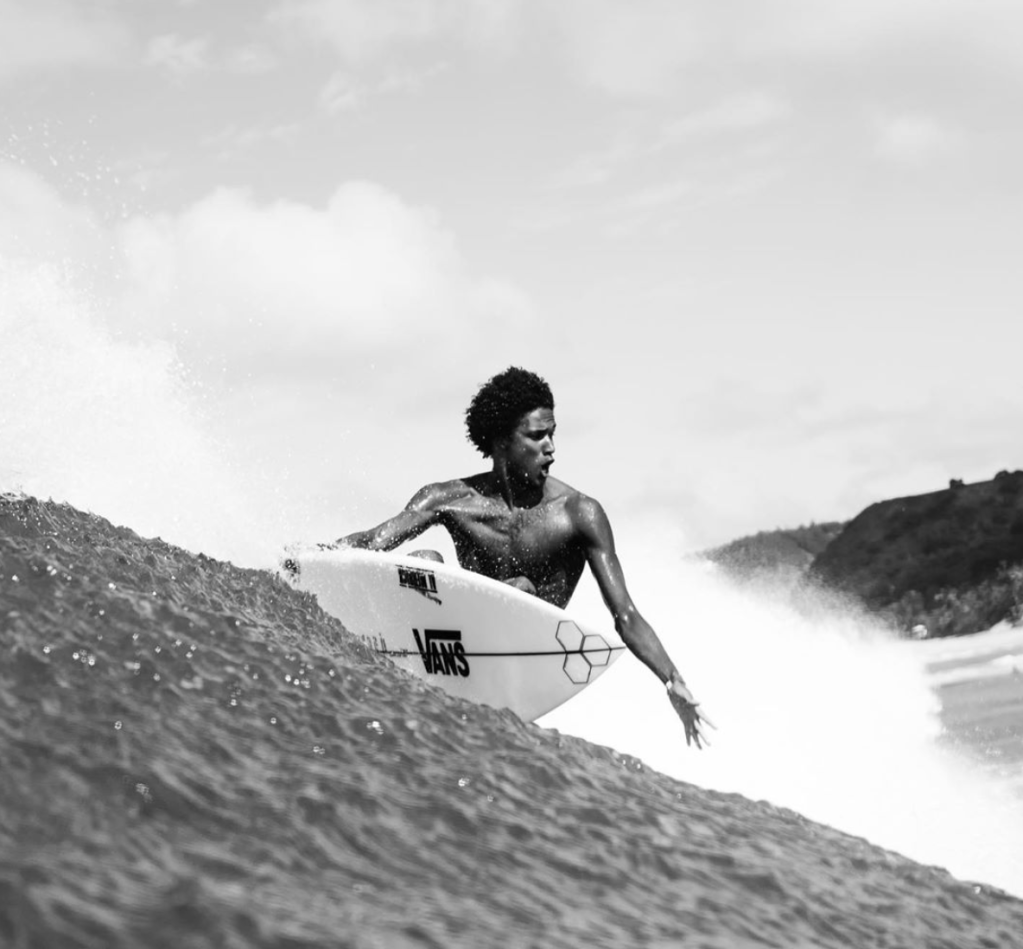
Michael (Mikey) February embodies elegance. His surfing is closer to dancing, and his approach to each wave resembles that of a young student doodling in the margins of their notebook. South African native, and the only black surfer to ever represent the country on the WSL, Mikey February glides through glass walls and glass ceilings with alarming ease. His brief, but nonetheless unforgettable appearance on the world tour in 2018, brought Mikey to the limelight, while his timeless style and refreshing outlook on competitive surfing left us spectators with our jaws propped open, watching his layback cutty (on repeat!) in 4k slow-mo.
This past week of protests have been nothing short of impressive. We have unprecedented momentum and our time and our money spent to combat systemic racism and police brutality are making concrete and meaningful changes. The rigidity of this problematic and traumatic society is feeling slightly more malleable. This is as good of a time as ever to talk about race and surfing and how it extends, seemingly in parallel to the world we live in today.
Let’s look at the competitors of the 2020 World Tour. We have twenty-one white athletes, eleven Brazilian athletes, one Hawaiian athlete, one Japanese athlete, and one Tahitian athlete. While the “Brazilian Storm” of eleven surfers is impressive, the drop off in diversity is steep and undeniable. When we look out at our local lineups (here in the United States), this lack of representation of black, brown, and minority populations is even more obvious. Even Hawai‘i, one of the most ethnically diverse states in the nation, hosts lineups that are jam packed with haoles.
Surfing is an exclusive pastime that hinges heavily on privilege. How close to the ocean do you live? Can you afford to buy a surfboard? What about multiple surfboards for different sized waves? Do you own a car? What about surf racks? Do you have the freedom to take four hours out of your day for pure leisure? These are all things that I take for granted. I’ll bet that some of you do too. Waves — the ocean in general — has so many barriers that block it from so much of the public.
At its core, surfing is self expression. It is a canvas in which personality can be spewed upon for the world to see. We are so saturated with the bleached blonde, white boys pulling into Huntington beach parking lots in their parent’s day-camping sprinter vans. Surfing doesn’t need another angry Santa Cruz dad yapping about “back in my day.” At risk of fetishizing black bodies, we need surfers like Michael February, Ivah Wilmot, and Alexxa Elseewi. We need new styles, new backgrounds, new personalities. We need black surfers because we need to share new stories.
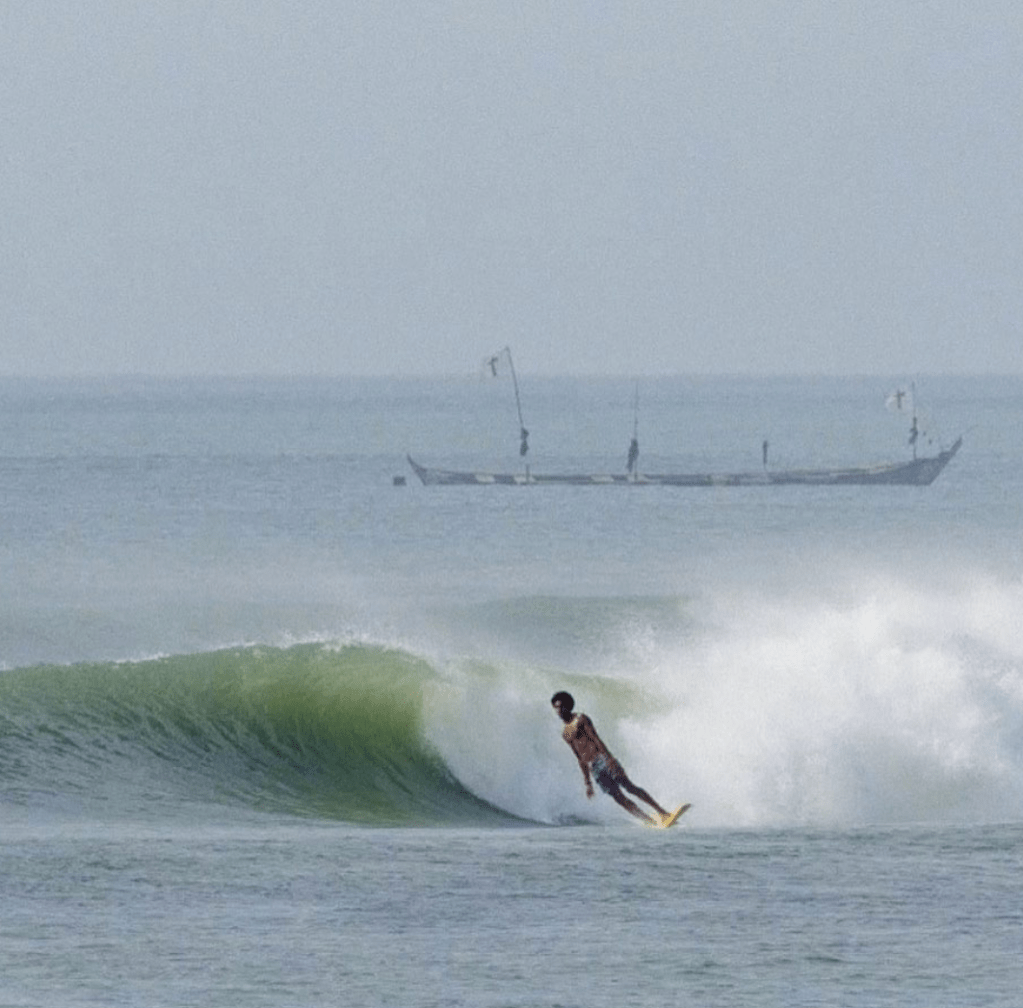
(Image from Mikey’s Instagram)
While surfing’s present revolves around the SoCal bro, surfing’s future involves, and includes, everybody. Things are changing for the better. And thanks to organizations like The City Surf Project and Brown Girl Surf, surfing is changing too. You can help open doors to the ocean by volunteering your time or donating your money to groups like these. Let’s get more brown bodies on waves. (And let’s get Mikey February back on tour!)
Black Lives Matter


 BAMBOOBLISTER
Leave a reply to Jen Cancel reply