
An Ode to Strider Raspberry Wasilewski
It’s the second morning of the Billabong Pipeline Masters and you can feel the ocean’s energy vibrate up the the sand and into your body through your toes. It’s loud on the beach and there is a salty haze from the exploding surf just yards from the shore. The atmosphere is tight, as if it could snap at any second, as if the chaos of the Pacific ocean might just swallow the island whole. It’s clear that death and destruction loom in the lineup, fear far exceeding any itches of curiosity.
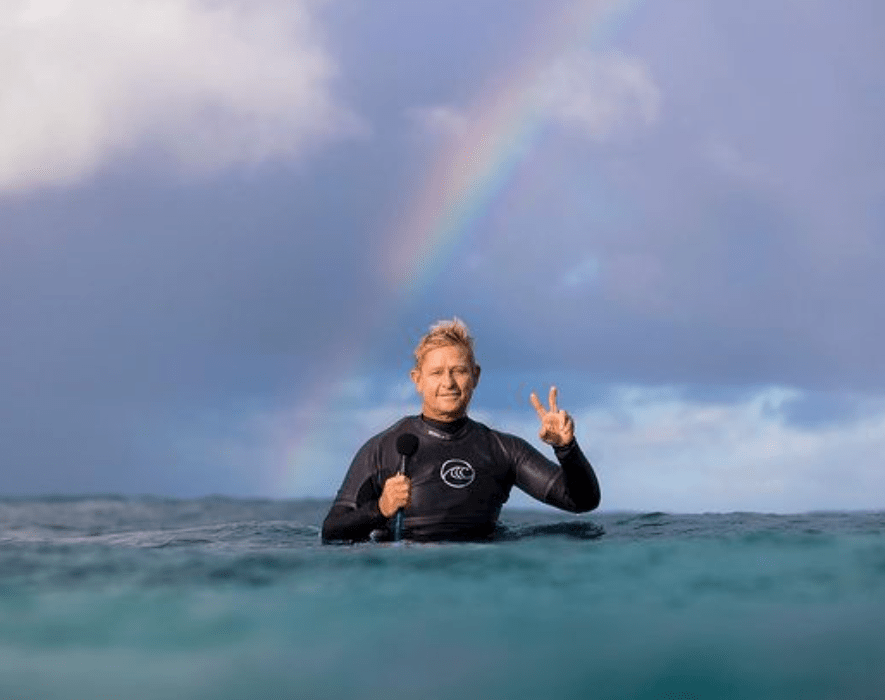
And then there is Strider, a blond head bobbing over north-swinging bombs, with his microphone in hand. Sports reporters, although often taken for granted, are some of the most recognizable voices in our lives. They are the soundtrack to all of the tragedy, glory, and unforgettable moments that sport provides. But if other reporters are in a symphony, Strider is free-styling on an electric guitar in his garage. Where Strider lacks the well-crafted catch phrases and soothing, quick-witted comments, he makes up for with pure stoke and norm-core relatability of a true fan of the game. Strider’s choppy, upbeat commentary along with his unapologetic biases lead to some of the most entertaining moments in live television.
But what makes Strider special, is not simply his fried, surfer-boy personality, but the fact that regardless of the conditions, Strider (and sometimes Pete Mel, who just got smoked reporting at Pipe), is out in the lineup taking bombs on the head with a microphone in hand. In no other sport do networks put their reporters in the same amount of danger as the World Surf League (WSL). I think back to the Eddie Aikau Invitational in 2016. The surf was giant, the bay borderline closing-out for most of the day. Strider, of course, was in the water, reporting on the life-threatening conditions around him. There is a video online of about five jet skis getting chased to the beach by a closeout bomb. If you look closely, you can see Strider on his hands and knees on the back of a sled with a 20-foot wall of whitewater behind him. Once on the beach, having barely made it safely, the reporters from the booth laugh and jostle at Strider, as if the experience wasn’t death-defying.
The WSL clearly has no issue with hucking Strider into any and all oceanic conditions while we, as fans, have no choice but to appreciate his dedication to on-spot reporting. He is our avatar, thrown into the heaviest situations for the sole purpose of our second-hand experience, be it fear, stoke, or thrill. And perhaps that is the core of it all. We live through Strider’s experiences on the WSL stream. He transports us from our laptops to the channel at pipeline. We teleport from our beds to the back of a jet ski in maxing Waimea Bay.
Thank you, Strider Raspberry Wasilewski. Your excitement and real-time reactions are relatable to every surfer, tugging at strings of sharing a lineup with your closest friends—hooting and hollering at every great wave and gnarly wipeout. But you don’t stop there. You take this to a completely new level, allowing us to experience the most dangerous lineups and heaviest situations, without the risk of… say… death. You are a gem, and to say the WSL is lucky is an understatement. I truly hope they pay you enough. Though, I’m not sure enough exists for me.


Leave a Reply